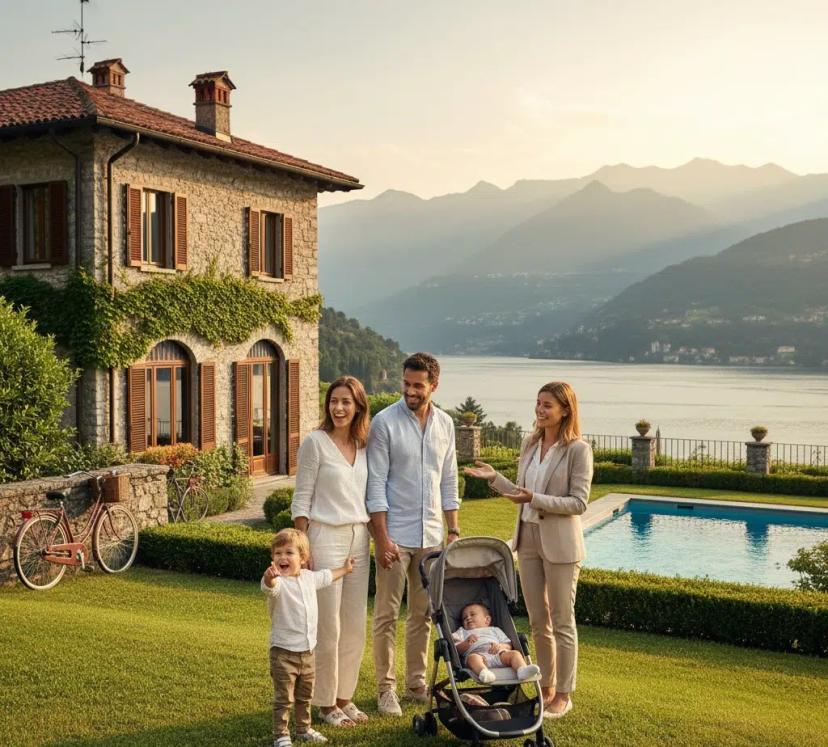
Buying a House in Umbria
Buying a house in Umbria means choosing an authentic region that offers a peaceful lifestyle and attractive real estate opportunities.

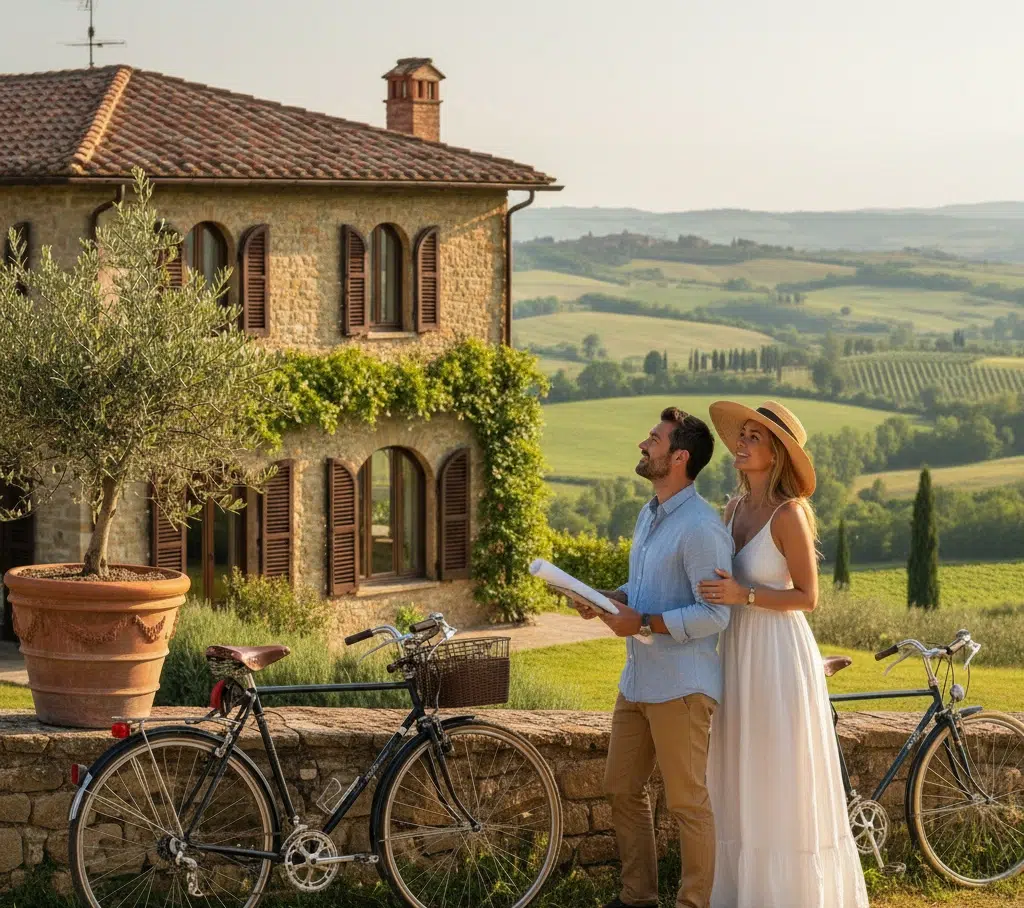
Buying a house in Umbria in 2026 means choosing a region of quiet, deeply authentic charm. Nestled between Tuscany, Marche, and Lazio, Umbria captivates with its lush landscapes, rare tranquillity, and exceptional artistic and spiritual heritage. It is a more intimate side of Italy, where time seems to stand still among rolling hills, olive groves, and medieval villages.
From Perugia and Assisi to Spoleto and Orvieto, each town has a strong identity and a peaceful way of life, far from the bustle of mass tourism. Umbria attracts those seeking a simple yet refined quality of life — whether for relocation, a rental investment, or a holiday home.
In this guide, you will discover property prices in Umbria, the most appealing areas to explore, and practical tips to make your purchase a success.
Aller en Italie
Relocation experts · since 2020
4.9
How many steps separate you from Italy?
A tailored offer based on your needs — in 3 min, no commitment
Tell us about your project
Profile, area, buying or renting
We select your services
From 50+ services in English
Receive your quote
Clear, detailed, personalized
*Indicative and customizable quote, no contractual commitment.
Free · 3 min · in English · no commitment
Create my offerProperty market in Umbria
The Umbria property market stands out in 2025 for its stability and highly competitive prices, making it one of the most accessible regions in central Italy for those looking to buy a house in Italy. Unlike neighbouring Tuscany, where strong foreign demand has driven prices up significantly, Umbria maintains an excellent value for money while offering a peaceful and authentic living environment, set among green hills, medieval villages, and well-preserved cultural heritage.
In major towns such as Perugia, Assisi, Spoleto, and Terni, properties typically sell for between €1,000 and €1,600/m², depending on location, size, and condition. These urban areas offer an ideal balance between local vibrancy and amenities, while remaining well connected to Rome and Florence — a key draw for those who want to buy a house in Italy with easy access to major cities.
The greatest opportunities, however, are found in the rural villages of the hinterland, such as Gualdo Tadino, Scheggino, and Amelia. Many traditional properties — some requiring renovation — are still available below €800/m², offering remarkable potential for a holiday home, a rental project, or the creation of a B&B in the heart of the Italian countryside.
THEY TALK ABOUT US
Maisons & Jardins · Le Figaro · Challenges
« Built on solid hands-on experience and an in-depth knowledge of Italian procedures. »
Jessica Colpin, co-founder — Maisons & Jardins France, Jan.–Feb. 2026
Why buy a house in Umbria?
Buying a house in Umbria is, above all, a meaningful choice. In an Italian property market where some regions are already saturated, Umbria retains a rare authenticity and an exceptional quality of life. It offers the perfect balance between proximity to major cities (Rome, Florence) and the tranquillity of a human-scale region — ideal for settling down or investing without the pressure of mass tourism.
The region attracts a growing range of buyers: remote workers, early retirees, sustainability-minded investors, and families seeking a simpler, more grounded lifestyle. Umbria allows you to blend heritage with modern life — its villages retain their historic character while welcoming a dynamic expat community, landscape-sensitive restoration projects, and local initiatives focused on ecotourism and traditional crafts.
Buying here means investing in a region that is still undervalued, yet growing in appeal each year, driven by booming cultural and green tourism. It means putting your money into a sustainable way of life, where every stone and every hillside tells a more intimate, more genuine story of Italy.
Aller en Italie
French expatriation expert · since 2020
4.9
71 verified reviews
1,500+ expats supported
50+ services with French-speaking professionals
20 regions covered
Local consultants based in Italy
Free appointment · 15 min · in French · no commitment
Book an appointmentWhere to buy in Umbria?
Known as the green heart of Italy, Umbria enchants with its rolling landscapes, medieval hilltop towns, and peaceful atmosphere. Between lakes, forests, olive groves, and historic towns, each area reveals a different facet of the region and offers property opportunities to suit every budget. Whether you are looking for a home in a historic centre, a property with countryside views, or a renovation project for a tourism venture, Umbria offers a rare variety — all within reach of Rome and Florence.
Here is an overview of the main areas to consider based on your goals and preferences:
Perugia: The regional capital and a vibrant university city, Perugia combines cultural dynamism with medieval heritage. Its historic centre draws art and history lovers, while the surrounding neighbourhoods offer more affordable properties — ideal for a rental investment or a well-connected primary residence.
Assisi: A world-renowned spiritual destination, Assisi enjoys a steady flow of international visitors. Buying a property in or around Assisi is a solid investment, particularly for seasonal rentals and guesthouse projects. The charm of the surrounding hills also appeals to buyers seeking peace and serenity.
Spoleto: Famous for its arts festival, Spoleto blends culture with quality of life. Its picturesque lanes and proximity to the mountains make it a perfect setting for an elegant holiday home or a tourism hospitality project.
Todi: Perched on a hilltop, this small town offers spectacular views and a refined atmosphere. Highly sought after by expats and foreign buyers, it remains more affordable than Tuscany while offering an equally enchanting setting.
Orvieto: Located on the border with Lazio, Orvieto captivates with its impressive cathedral, renowned wine, and strategic position on the Rome–Florence axis. It is an appealing option for a purchase that combines heritage value with practicality, thanks to excellent rail connections.
Lake Trasimeno and surroundings: Around the largest lake in central Italy, villages such as Passignano, Castiglione del Lago, and Tuoro sul Trasimeno offer properties with stunning water views — perfect for seasonal rentals or family retreats.
Charming villages: From Montefalco to Bevagna, Trevi, and Gubbio, many villages retain an untouched authenticity. Stone houses in need of renovation can still be found at very attractive prices — ideal for a gîte, workshop, or holiday home project in rural, sun-drenched Italy.
Umbria is increasingly recognised as one of the last regions in Italy where luxury remains synonymous with authenticity. While Tuscany has seen prices soar, the luxury property market in Italy is finding in Umbria a more discreet and refined alternative. The region attracts an international clientele in search of preserved heritage and understated luxury, where value lies as much in the location and architectural quality as in the lifestyle on offer.
Luxury property in Umbria
The high-end market in Umbria is growing around exceptional, carefully restored properties: former country residences transformed into manor houses, modernised wine estates, and historic inns converted into boutique hotels. These properties stand out for their harmonious integration into the landscape and their celebration of local heritage, far removed from the standardised approach of international luxury.
Another defining feature of the Umbrian market is its focus on sustainability. Many renovation projects now incorporate geothermal energy, eco-friendly materials, and rainwater harvesting systems, while respecting traditional aesthetic codes. This approach attracts a European clientele that values elegant simplicity and artisanal quality over ostentatious display.
Investing in luxury real estate in Italy, and in Umbria in particular, means backing a lasting value: a central, well-connected, still under-the-radar region where the market remains fluid and truly exceptional properties are rare. More than an acquisition, it is a lifestyle choice, rooted in beauty, discretion, and balance.
How to buy a house in Umbria?
If you are considering buying a house in Umbria, it is essential to understand the steps involved and to surround yourself with trusted professionals from the outset. Through our bilingual team based in Italy, you benefit from personalised support at every stage: defining your project, identifying the most suitable areas (Perugia, Assisi, Todi, Spoleto, Orvieto…), property search, legal due diligence, negotiation, notary signing, and handling all tax and administrative formalities.
Whether you want to settle permanently in Umbria, buy a holiday home in the Italian countryside, or invest in a rental or tourism property (such as a B&B or guesthouse), our network of English-speaking professionals is with you every step of the way. You benefit from a secure, transparent purchase with no language barrier, in one of Italy's most welcoming and unspoilt regions.
Umbria is a region where demand for authentic, characterful accommodation continues to grow — particularly among travellers seeking genuine local experiences. Buying a character property to open a B&B is a concrete opportunity, both personally and professionally. Purchase prices remain affordable compared to other Italian regions, and the tax framework can be advantageous, especially for foreigners who wish to establish residency. However, making the project a success requires a solid understanding of local regulations, administrative procedures, and the specific dynamics of the tourism market. Our team supports those ready to take the leap, from finding the right property through to the official opening of their business.
A favourable flat tax for foreign retirees in Umbria
For those looking to relocate to Italy and transfer their tax residency, Umbria offers an ideal living environment from which to benefit from the attractive tax incentives introduced by the Italian government. Since 2019, Italy has offered a 7% flat tax for foreign retirees who choose to settle in certain municipalities in southern and central Italy, several of which are located in Umbria.
In practical terms, retirees receiving a pension from abroad who become Italian tax residents can benefit from a flat rate of 7% on their foreign-source income, including pensions, for a maximum period of nine years. To qualify, you must move to an eligible municipality with fewer than 20,000 inhabitants and not have been an Italian tax resident at any point during the previous five years.
This tax regime makes Umbria a top destination for foreign retirees wishing to buy a house in Italy, benefit from a reduced tax burden, and live in a setting that is peaceful, centrally located, and culturally rich. Combined with an still-accessible property market and a moderate cost of living, this flat tax makes a comfortable and stress-free relocation entirely achievable.
If you would like to learn more about buying property in Umbria, the process of transferring your tax residency, or the conditions for accessing the 7% flat tax, our team provides practical guides and English-speaking experts to support you at every stage of your move.
You are now ready to take the next step and buy a house in Umbria — an authentic, well-balanced region full of opportunities to build a lasting life project in Italy.
FAQs
1 – Is Umbria a good region for a rental or tourism investment?
Yes, particularly in areas close to popular sites such as Assisi, Perugia, and Lake Trasimeno. The steady flow of visitors seeking authentic experiences and charming accommodation makes Umbria especially well-suited to B&B, guesthouse, and seasonal rental projects — all at purchase prices that remain more reasonable than in Tuscany.
That said, it is essential to carry out a personalised profitability analysis before committing, in order to accurately assess the property's potential, running costs, seasonality, and expected rental income.
2 – Are there €1 houses for sale in Umbria?
No, Umbria is not officially part of the "€1 house" schemes launched by certain Italian municipalities to combat depopulation.
However, it is entirely possible to find very low-priced properties for sale, particularly in rural villages or less touristy areas. Many homes are listed between €30,000 and €50,000 — sometimes with a garden, land, or panoramic views — making them an excellent alternative, without the administrative constraints that often come with €1 house programmes.
3 – Can you buy a house near the sea in Umbria?
Umbria is a landlocked region with no direct access to the sea, unlike its neighbours Marche and Tuscany.
However, its central location means you can easily reach the Adriatic coast (towards Ancona or San Benedetto del Tronto) or the Tyrrhenian coast (towards Grosseto or Civitavecchia) within 1.5 to 2 hours by car.
For those who want to live near water, Lake Trasimeno is an excellent alternative: it offers a peaceful setting, sandy beaches, water sports, and lakeside homes at prices far more accessible than on the coast.
4 – Is Umbria a good property investment?
Yes, Umbria can represent a strong opportunity to buy a house in Italy at an affordable price, particularly for a holiday home, a guesthouse, or a seasonal rental. The region appeals through its authenticity, quality of life, and steadily growing tourist appeal.
However, it is worth noting that rental yields in Umbria tend to be more moderate than in more tourist-intensive areas such as Tuscany, Liguria, or coastal regions. It is therefore important to carry out a thorough profitability study based on the target municipality, the type of property, and the intended rental model.