Living in Liguria: colourful harbours, panoramic trails and hidden coves
Liguria, where the sea meets the mountains, is drawing a growing number of expats with its picturesque villages and Mediterranean way of life.

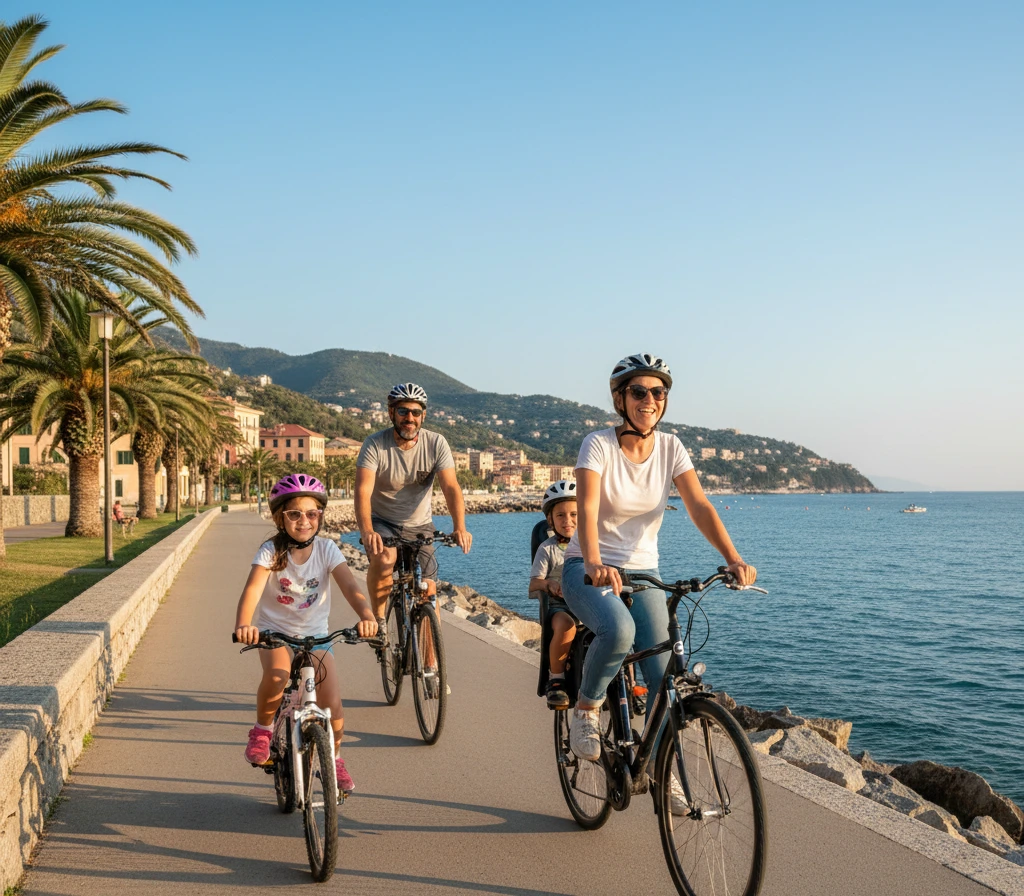
Living in Liguria means choosing an elegant, sun-drenched region on a human scale, nestled between the sea and the mountains. From the pastel-coloured villages clinging to the cliffs of the Cinque Terre and the medieval alleyways of Finalborgo, to the seafront promenades of Alassio and Sanremo, and the port city of Genoa with its rich maritime heritage, Liguria attracts a growing number of expats and international residents each year who are looking for a peaceful, authentic, and deeply Mediterranean way of life.
Life here follows the rhythm of the sea: beaches, rocky coves, panoramic hiking trails, fishing harbours, and nature reserves. Ligurian cuisine is also part of the region's charm — pesto genovese, focaccia, farinata, trofie al basilico, and freshly caught fish. The interplay of sea, mountains, and local traditions gives rise to a quiet but proud culture, shaped by hospitality, simplicity, and a deep connection to the land.
In this guide, we explore why so many people choose to relocate to Liguria, which areas are most appealing for settling down — Genoa, Savona, Imperia, La Spezia, the Cinque Terre, or the Riviera dei Fiori — and how to rent or buy property there. We also cover employment opportunities, cost of living, essential administrative steps, and the quality of healthcare and public services.
THEY TALK ABOUT US
Maisons & Jardins · Le Figaro · Challenges
« Founded on solid field experience and an in-depth knowledge of Italian procedures. »
Jessica Colpin, co-founder — Maisons & Jardins France, Jan.–Feb. 2026
Why choose to live in Liguria?

Living in Liguria means choosing an elegant, luminous, and deeply Mediterranean region — one of the most refined and authentic territories in all of Italy. Between the sea, the mountains, and pastel villages suspended above the waves, Liguria offers a strong cultural identity shaped by centuries of maritime tradition, trade, history, and Genoese influence.
Everything here evokes a sincere and understated Italy: the shimmering sea, the medieval alleyways, the fragrant basil-infused flavours, the quiet hospitality of the locals, and a gentle pace of life felt at every turn.
Situated between the French Riviera and Tuscany, bordered by one of the country's most beautiful coastlines, Liguria offers a unique balance of natural beauty, preserved heritage, and quality of life. From the panoramic trails of the Cinque Terre to the palazzi of Genoa, from the historic villages of Finalborgo and the beaches of Alassio to the hilltop hamlets of the Riviera di Ponente and the wild coves of the Riviera di Levante, Liguria embodies an elegant, serene Italy, deeply rooted in its maritime traditions.
With Genoa as the regional capital — a cultural, economic, and maritime hub — Liguria draws both expats seeking a peaceful seaside lifestyle and families looking for a safe, sunny, history-rich environment. Here, Italian values take on a distinctive character: a strong attachment to the sea, a taste for simple and authentic produce, quiet but genuine conviviality, respect for the land, and a deep sense of community.
The Ligurian economy rests on several pillars: coastal tourism, shipping and port industry, high-quality food and agriculture (pesto genovese, focaccia, olive oils, hillside wines), maritime craftsmanship, as well as maritime technology and university research in Genoa. And living in Liguria is not just about work — it means embracing a way of life defined by slowness, light, and landscapes that shift with every season.
From the colourful villages of the Cinque Terre to the Riviera dei Fiori, from the wild landscapes of the Gulf of Tigullio to the historic alleyways of Genoa, and through Portofino, Camogli, Lerici, and Bordighera, Liguria captivates with its natural elegance, gentle pace of life, and singular cultural identity.
Aller en Italie
French expatriation expert · since 2020
4.9
71 verified reviews
1,500+ expats supported
50+ services with French-speaking professionals
20 regions covered
Local consultants on the ground in Italy
Free appointment · 15 min · in French · no commitment
Book an appointmentWhere to settle in Liguria?
Settling in Liguria means accessing a region of varied contrasts, where each area offers a different lifestyle — whether along the coast, in the hills, or in the hinterland. Despite its small size, the region presents very distinct atmospheres, making it easy to find a setting that suits your needs and expectations.
Genoa appeals to those looking for a dynamic urban environment, with a wide range of services, universities, museums, and a more varied property market. To the west, Savona, Albenga, and Imperia are particularly well suited to those who want to live near the sea while enjoying a calm and well-organised daily life. The Riviera dei Fiori — including Sanremo, Ospedaletti, and Bordighera — attracts residents for its mild climate and residential atmosphere, popular with both families and retirees.
To the east, La Spezia offers a strategic location for those working between Liguria and Tuscany, while Lerici and Tellaro appeal to those seeking a more exclusive setting. The hilltop villages of the hinterland — Finalborgo, Apricale, Dolceacqua, Varese Ligure — represent an ideal alternative for those who prioritise tranquillity, authenticity, nature, and more accessible prices than on the coast.
In Liguria, the choice of where to live depends as much on budget as on lifestyle: proximity to the sea, natural surroundings, ease of getting around, peace and quiet, or urban activity. Each area has its own identity, making it straightforward to find a setting that truly matches your plans.
Essential steps for living in Liguria

Settling in Liguria requires some preparation to avoid administrative surprises and ensure a smooth arrival in a region where the sea, mountains, and historic villages all coexist harmoniously. As soon as your plans begin to take shape, the first essential step is to apply for your codice fiscale, the Italian tax identification number. This personal number is required for all everyday administrative tasks: renting a flat in Genoa, buying a property on the Riviera di Ponente, setting up utility contracts, or accepting a job offer. It can be obtained free of charge from the Agenzia delle Entrate in Liguria, or from the Italian consulate in your home country before you arrive.
Once you are established, you will need to register your residence with the comune of your new town. This official registration confirms your presence in Italy and gives you access to public services: the healthcare system, local taxation, vehicle registration, municipal services, and, where applicable, school enrolment for children.
In Liguria, administrative procedures can vary slightly from one comune to another, particularly in the hilltop villages of the hinterland or in certain areas of the Riviera di Levante where processes tend to be more traditional and less digitalised. More tourist-oriented coastal municipalities generally follow faster procedures, though they can be demanding in terms of documentation. It is therefore advisable to check directly with the comune regarding the required documents and processing times.
For a complete relocation to Liguria, you should also consider:
- opening an Italian bank account,
- registering for the waste disposal tax (TARI),
- finding out about limited traffic zones (ZTL), which are common in the historic centres of cities such as Genoa, La Spezia, and Sanremo,
- checking residential parking rules, which are particularly strict in heavily visited coastal areas during the summer.
If you are not yet confident in Italian or would like support throughout the process, working with a specialist team can save you valuable time and help you avoid administrative mistakes. Personalised guidance will make your move to Liguria smoother and more secure, allowing you to quickly enjoy your new life between the sea, the hills, and the colourful villages of north-western Italy.
Renting a flat in Liguria
Renting a property in Liguria gives you access to an elegant and diverse coastal region, where the rental market varies considerably depending on whether you settle by the sea, in a city, or in the hinterland. Rents can be high in tourist areas, while less frequented locations offer more affordable options.
Genoa is the largest and most dynamic city in the region. Neighbourhoods such as Albaro, Carignano, and Castelletto are among the most sought-after and therefore more expensive, while Marassi, San Fruttuoso, and Sampierdarena offer more affordable rents while remaining well served by public transport. The market is active: when a property meets your criteria, it is advisable to move quickly.
Along the Riviera di Ponente, cities such as Savona, Albenga, and Imperia offer a pleasant living environment with generally more balanced rents, although areas close to the beaches can see prices rise during peak season. Sanremo and Bordighera remain particularly in demand for their mild climate and residential character.
On the Riviera di Levante, locations such as Santa Margherita Ligure, Rapallo, Camogli, and Sestri Levante command higher prices, especially near the harbour or the waterfront. In the Cinque Terre, Portovenere, and Lerici, a large proportion of properties is dedicated to tourist rentals. Annual contracts do exist, but they are often hard to find, especially in areas closest to the sea.
By contrast, hinterland villages — Finalborgo, Dolcedo, Apricale, Varese Ligure, Pigna — offer a more stable rental market, with significantly lower rents and more year-round availability, while still remaining within reasonable distance of the coast.
When signing a rental agreement in Liguria, expect to provide a deposit of two to three months' rent, along with agency fees equivalent to one month's rent, as is standard in most of north-western Italy.
Buying a house in Liguria
Buying a house in Liguria means investing in a highly sought-after coastal region where supply is limited and prices vary considerably by area — a result of the narrow geography between sea and mountains, which restricts new construction and creates a tight market. The elegant villages of the Riviera di Levante, such as Camogli, Santa Margherita Ligure, and Sestri Levante, attract buyers looking for exclusive properties with sea views, while the Riviera di Ponente draws interest with its popular seaside resorts, particularly Alassio, Laigueglia, Bordighera, and Ospedaletti. Genoa remains a more accessible alternative with a varied and interesting market for year-round investment, while La Spezia and the Golfo dei Poeti benefit from strong demand driven by Cinque Terre tourism.
Before buying, it is essential to verify the cadastral and urban planning status of the property: in Liguria, as in all regions with an older built heritage, undeclared alterations, extensions added over the decades, or cadastral inconsistencies are common — particularly in historic town centres and in houses located on hillsides or by the sea. A technical survey by a qualified surveyor is therefore strongly recommended.
Negotiations can also take time, as many properties have been in the same family for generations and a sale often involves multiple heirs, which can extend the timeline and add an emotional dimension to discussions. To secure your purchase and facilitate communication, being supported by a lawyer or a specialist with expertise in the local market is a genuine advantage in this dynamic, varied, and tourism-driven property market.
Working in Liguria
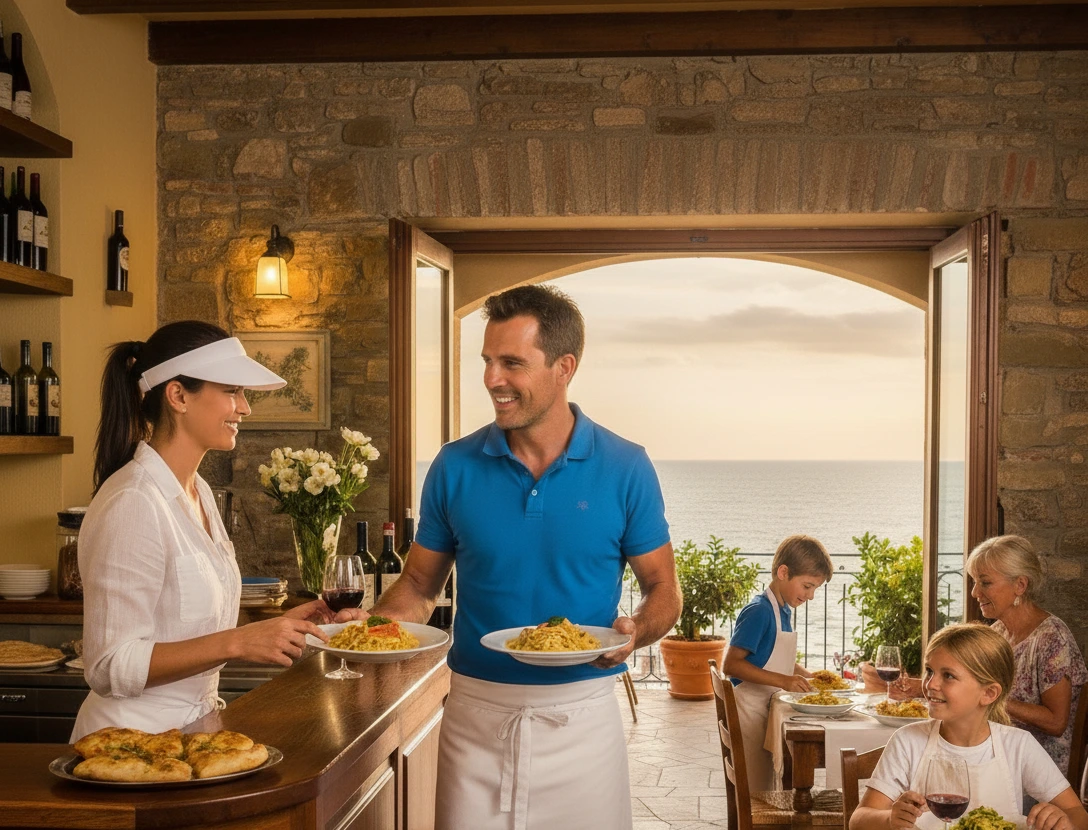
The Ligurian economy rests on several strong sectors: coastal tourism and hospitality, highly developed along the Riviera di Levante (Portofino, Santa Margherita Ligure, Camogli, Sestri Levante) and the Riviera di Ponente (Alassio, Bordighera, Sanremo); port and logistics activities centred on Genoa, which is home to one of Italy's largest commercial ports; the nautical industry, yachting, and shipbuilding; digital services, a growing sector in the Genoa metropolitan area; and the agri-food sector, particularly olive oil, wine, and local specialty products. Guesthouses, hotels, restaurants, and tourist rentals regularly recruit staff, especially during the high season.
Salaries in Liguria are slightly higher than in many southern regions, but remain below Lombard levels: an average employee earns between €1,300 and €1,600 net per month, while skilled professionals — engineers, IT specialists, sales managers, nautical experts, and tourism executives — can earn between €1,900 and €2,500 net depending on experience. Seasonal jobs are plentiful from April to October in coastal resorts and the Cinque Terre, where tourist demand surges.
To maximise your chances of finding a job in Liguria, use the main Italian job platforms (Indeed Italia, Subito Lavoro, Bakeca), adapt your CV to Italian standards, and keep your LinkedIn profile up to date in Italian. Companies serving an international clientele — hotels, maritime agencies, yachting firms, port services, estate agencies — regularly look for bilingual profiles, and French-Italian speakers are particularly valued in a region that borders France and is strongly oriented towards international tourism.
Cost of living in Liguria
The cost of living in Liguria is generally higher than in other Italian regions, but remains attractive for expats seeking a Mediterranean lifestyle between the sea, the hills, and historic villages. This region — both a seaside and residential destination — offers a rare quality of life: prestigious local produce, accessible beaches, small harbours, and natural parks such as the Cinque Terre.
Liguria attracts both retirees and working professionals, particularly thanks to its proximity to France and Monaco and its mild climate year-round.
In Genoa, a single person's monthly budget typically ranges between €1,500 and €2,000, including rent. A one-bedroom flat in central neighbourhoods (Carignano, Castelletto, Albaro) averages between €900 and €1,400, while in more affordable or peripheral areas, rents tend to fall around €650 to €950.
In coastal cities such as Savona, Imperia, and La Spezia, rents are slightly more affordable: a single person can live comfortably on €1,300 to €1,700 per month. A one-bedroom flat typically rents for between €650 and €1,100, depending on proximity to the sea and the time of year, as summer demand can push prices up.
Villages in the Ligurian hinterland (Valle Argentina, Val Fontanabuona, Lunigiana) offer significantly lower costs: a single person can live there on €1,100 to €1,400 per month, with rental costs ranging from €400 to €650. A compelling option for those who want peace and quiet while remaining within easy reach of the coast.
When it comes to everyday spending, local produce remains well priced — especially at markets (fresh fish, seasonal vegetables, olive oil, regional cheeses). However, restaurants, cafés, and leisure activities by the sea tend to be more expensive than in other parts of Italy. Tourist hotspots — Portofino, the Cinque Terre, and Santa Margherita Ligure in particular — charge above the national average.
Public transport is convenient along the coast, thanks to a rail network widely used for travelling between seaside towns. A monthly pass in Genoa costs around €45 to €55. However, for living in the hinterland or reaching certain beaches and hiking trails, a car is almost essential.
Healthcare and services in Liguria
Liguria has a dense network of hospitals along its coast, with several key facilities — particularly in the Genoa area. The Policlinico San Martino, one of Italy's largest hospitals, is especially well regarded in fields such as oncology, neurology, transplantation, cardiovascular surgery, and emergency care.
Also in Genoa is the Istituto Giannina Gaslini, a specialist paediatric hospital considered one of the best children's hospitals in Europe. In La Spezia and Savona, the San Bartolomeo and San Paolo hospitals provide reliable care, while the province of Imperia offers good coverage for basic and intermediate healthcare, notably at the Borea hospital in Sanremo.
However, the quality of care can vary depending on location. In more isolated areas of the Ligurian valleys — such as Val Fontanabuona or Val di Vara — facilities are smaller, less well equipped, and often without specialist services. Patients must travel to larger coastal cities, especially Genoa, for more complex examinations or procedures. Moreover, as in many Italian regions, waiting times in emergency departments and for certain diagnostic tests can be lengthy, particularly in summer when the influx of tourists increases demand.
In terms of transport, Liguria is well connected thanks to a rail network running the length of the coast, linking Menton and Ventimiglia to Genoa, La Spezia, Pisa, and northern Italy. Regional and intercity lines make it easy to reach the main hospital cities. Genoa's Cristoforo Colombo International Airport also facilitates travel to Italy and across Europe, although its routes are more limited than Milan Malpensa, which Ligurians often use for international flights.
In rural inland communes or certain mountain areas, a car remains essential — whether for reaching hospitals and specialist centres, getting to work, or simply doing the weekly shop. Public transport is less frequent in these areas, and the narrow, winding roads make journey times longer, especially in winter or during the summer rush.
French speakers and expats in Liguria

In 2025, Liguria is attracting a growing number of international expats and foreign residents looking to relocate, invest, or work remotely in Italy. Its proximity to France, mild climate, seaside setting, and appealing property market make it one of the most sought-after regions in northern Italy.
New arrivals tend to settle primarily in Genoa — a dynamic capital, international port city with universities, international schools, and major companies in logistics, naval industries, and technology. Residential neighbourhoods such as Castelletto, Albaro, and Carignano are particularly popular for both buying and renting.
The border area of Ventimiglia, Bordighera, and Sanremo attracts many residents who work in France or Monaco while living in Italy. This proximity drives demand for holiday homes and investment in tourist rentals, especially near the sea and local harbours.
The cities of Savona, Imperia, and La Spezia offer an excellent balance of quality of life, tranquillity, and more affordable prices than the ultra-touristic zones (Portofino, Cinque Terre). The hinterland, with its villages and olive groves, also draws retirees, families, and freelancers, often interested in property renovation or opening a bed and breakfast.
Choosing to relocate to Liguria means enjoying a Mediterranean lifestyle between the sea and the hills, just a short distance from France, while benefiting from strong property opportunities and an environment well suited to both personal and professional projects.
FAQs
1- Do I need to speak Italian to live in Liguria?
Yes. In tourist areas (Cinque Terre, Portofino, Sanremo, Ventimiglia), you can get by in English or French, but for administrative matters, healthcare, work, and day-to-day integration, Italian is essential — especially outside the coastal towns.
2- What is the cost of living in Liguria?
Liguria is more expensive than southern Italy, but remains attractive.
- Genoa: €1,500–2,000/month (including rent).
- Savona, Imperia, La Spezia: €1,300–1,700/month.
Local produce remains affordable, but seaside restaurants tend to be more expensive.
3- How do I find accommodation in Liguria?
Tourist areas (Portofino, Cinque Terre, Santa Margherita Ligure) are dominated by seasonal rentals, so searching outside peak season is recommended. Useful platforms: Immobiliare.it, Idealista.it, Casa.it. Standard contracts run 4+4 years, typically with 6 months' notice.
4- Why choose Liguria for relocation?
The region combines a mild climate, proximity to France and Monaco, stunning coastal scenery, and local gastronomy (pesto, focaccia, olive oil) with real estate opportunities, particularly in the hinterland and the border zone.
An ideal destination for investing, working remotely, or living by the sea.